Building a Live CMO Command Center
One System for Reporting, Content, and Creative Handoff
Most marketing dashboards are a snapshot. Someone updates them until they stop. I wanted something different: a live operating system where reporting, content, and creative work all lived in one place and stayed current on their own.
So I built one.
10 Hours Saved Weekly on Manual Reporting
5 Live Data Sources Connected in One System
One Source of Truth for Marketing, Design, and Dev
Goals
Replace scattered spreadsheets and manual reporting decks with one live command center
Give leadership real-time visibility into paid, organic, SEO and social performance without waiting on a weekly export
Connect creative and dev work directly to the marketing plan instead of leaving it in separate files
Build a system that could be handed off or rebuilt for a new team, not a dashboard that goes stale after a quarter
What I Built
Systems Architecture
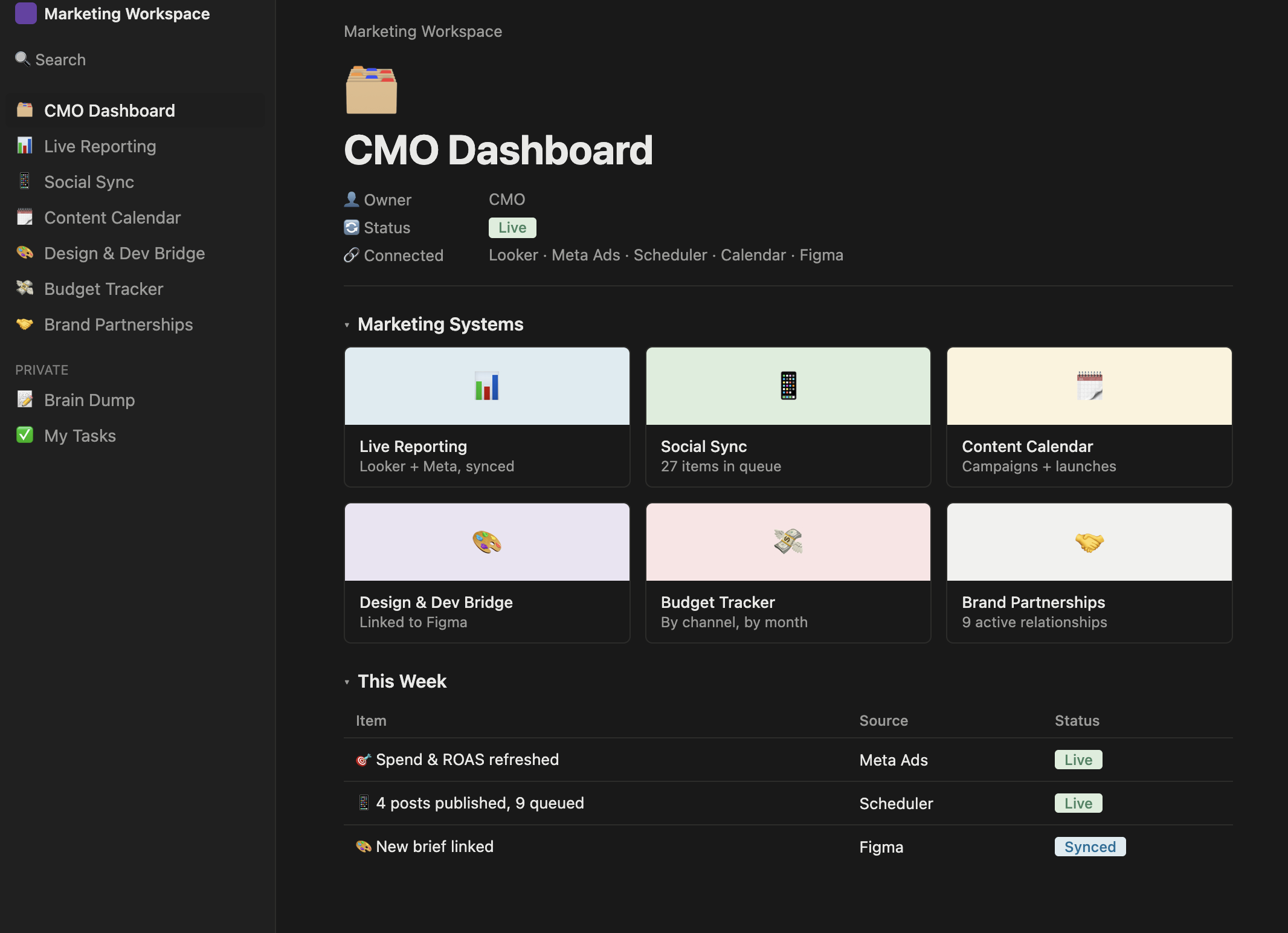
Designed Notion as the central operating system for the entire marketing function
Mapped reporting, content, campaigns, creative, and dev handoff into a single structure instead of five disconnected tools
Live Reporting
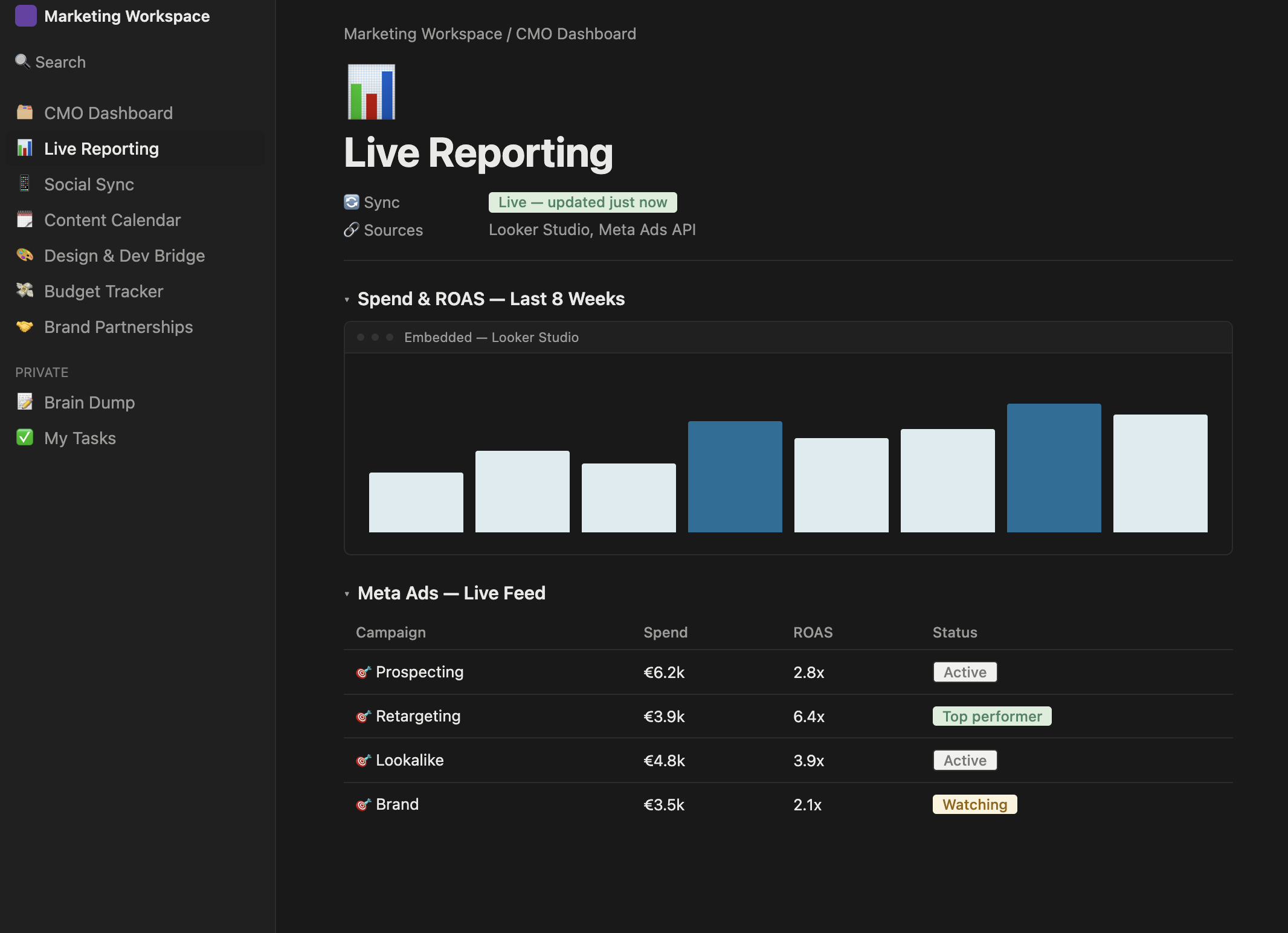
Connected Looker Studio dashboards directly into Notion, so leadership could see live campaign performance, and SEO instead of waiting on a manual export
Synced Meta Ads data on a live feed, so spend, reach, and conversion numbers updated automatically instead of being pulled and pasted every week
Social and Content Ops
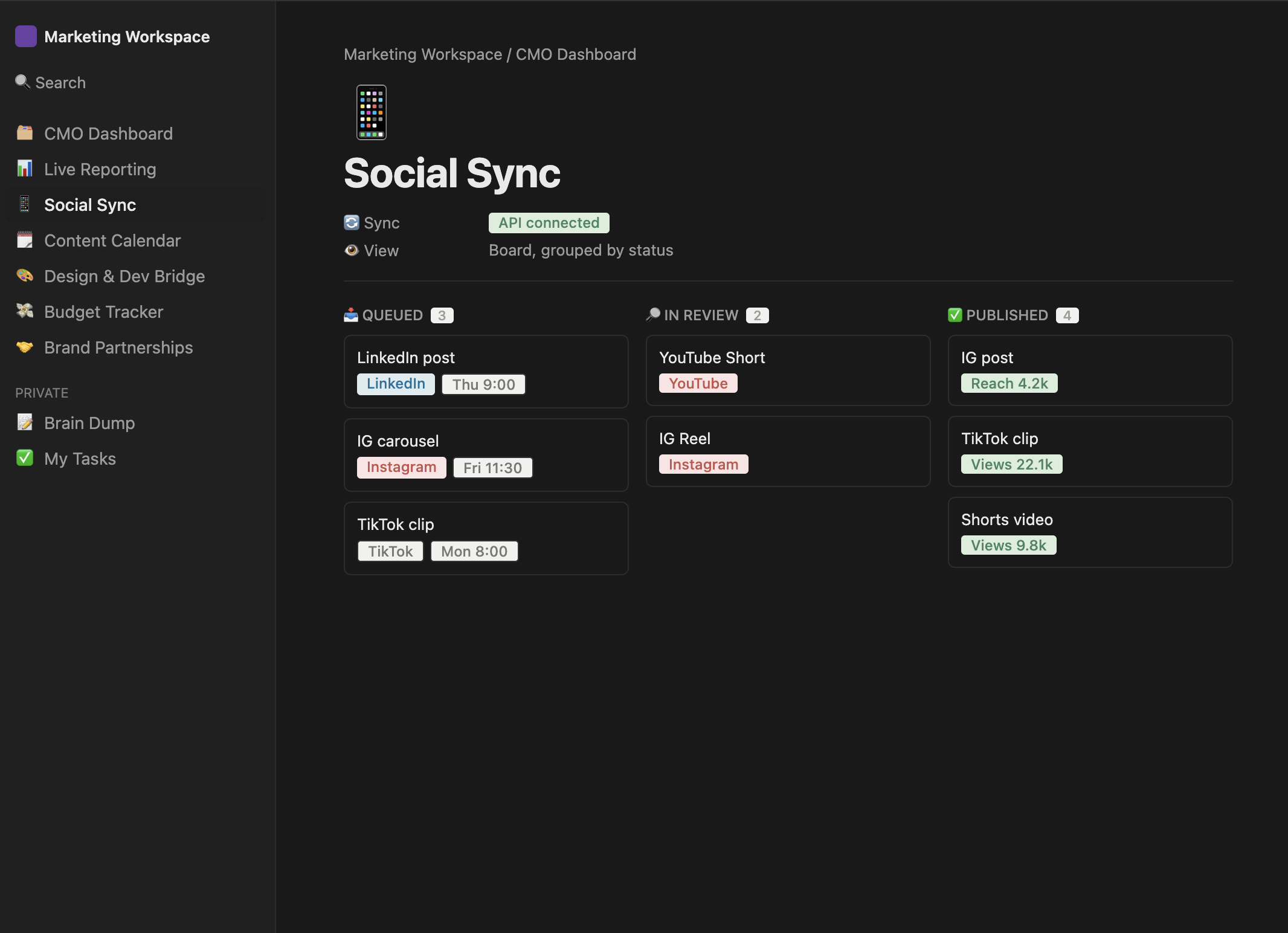
Built an API connection to Metricool so scheduled and published social content, along with performance data, flowed into Notion automatically
Synced the marketing calendar live, giving one place to see what was scheduled, what was live, and what was in review, instead of cross-referencing multiple calendars
Creative and Dev Bridge
Connected Figma to the system so design and dev could work directly off the same briefs and assets marketing was using, instead of duplicate files and version confusion
What I Did
1. Centralized Reporting Eliminated manual weekly reporting by piping Looker and Meta Ads data live into Notion.
2. Automated Social Ops Built the Metricool API sync so content performance updated without manual entry.
3. Unified the Calendar Built one live calendar covering campaigns, content, and launches across the team.
4. Bridged Design and Marketing Connected Figma so creative and dev pulled from the same source as marketing, cutting down on version confusion and duplicate briefs.
5. Built for Repeatability Structured every piece so it could be handed off or rebuilt for a new team without starting from scratch.
Results and Impact
Reporting stopped being a weekly task and became a live view. Leadership could check performance any time instead of waiting on a deck.
Design, dev, and marketing worked from one shared source instead of three. Fewer version conflicts, faster creative turnaround.
The system was built to outlast any single campaign or hire. A structure a new marketer or agency could pick up and run, not a dashboard that expires.
Key Insight
The value here was was the infrastructure underneath it: reporting, content ops, and creative handoff running as one connected system instead of five disconnected tools. That is the difference between reporting on marketing and running marketing like an operating system.